Psychological Safety During IV Ketamine Treatment: How Ember Health Supports Patients Through Challenging Experiences


Schedule Your Ketamine Therapy Consultation Today
Intravenous (IV) ketamine has emerged as an important treatment option for people living with depression, including many who have not found relief with conventional approaches. While much attention has been paid to its effectiveness and favorable medical safety profile, far less has been written about the psychological experience of the infusions themselves.
For many people, ketamine infusion experiences are calming, insightful, or emotionally meaningful. For others, parts of the experience may feel confusing, emotionally intense, or frightening. These moments are transient, but they underscore an important principle: administering ketamine safely requires providing thoughtful psychological support throughout the altered state.
At Ember Health, we believe psychological safety is a critical component of high-quality ketamine care. In partnership with our research collaborators at Harvard Medical School, Massachusetts General Brigham Hospital (MGB), we reviewed our last 5.5 years of care, including 2,114 patients and 30,402 IV ketamine infusions. In this review, we examined how often psychologically challenging experiences occur, how they were managed in clinical practice, and what these findings suggest for the evolving standards of ketamine care.
A Structured Approach to Care
Every appointment at Ember Health is intentionally designed to support patients before, during, and after the infusion. Each visit lasts approximately 90 minutes and is divided into three distinct phases.

The appointment begins with approximately 20 minutes of preparation. During this time, the doctor and nurse team review the treatment plan, answer questions, place the IV, and help the patient prepare psychologically for the experience. A clinician works with the patient to identify an intention for the session, select music, and identify comfort measures for the session itself. The clinician may guide the patient through a breathing or grounding exercise if the patient is feeling anxious. Before the infusion begins, clinicians also discuss consent for therapeutic touch should reassurance become helpful during treatment.
The infusion itself lasts 40 minutes, followed by a 10-minute washout period. Throughout this time, a dedicated clinician remains at the patient's side to observe breathing patterns, vocalizations, body language, and subtle changes in the patient's experience. When appropriate, they provide calm verbal reassurance, grounding exercises, or hand holding to help patients navigate moments of uncertainty or distress.
Following the infusion, patients are gently reoriented before entering a period of reflection that lasts about 20 minutes. Patients are invited to describe what they experienced, identify meaningful insights, and discuss whether any portion of the session felt emotionally significant. Because difficult moments during ketamine treatment may be entirely internal, clinicians are not always able to recognize them, without asking directly. Patients transition to a quiet common area, where they can continue resting, reflecting, or enjoying tea until they feel ready to leave.
This structure reflects the philosophy that the infusion itself is only one part of the therapeutic experience.
Understanding Adverse Events During Ketamine Treatment
Discussions of ketamine safety often focus on medical adverse events, which we have investigated extensively - see here a summary of our related research.
Published research involving more than 3,700 participants has demonstrated that 99.9% of low-dose ketamine treatments occur without a serious medical adverse event (source). In our clinical experience, serious cardiac complications are incredibly rare, and temporary increases in blood pressure and heart rate were generally not considered dangerous when appropriately monitored.
Nonetheless, medical complications do occur. Nausea, vomiting, headaches, tachycardia, and hypertension are among the more common concerns clinicians monitor for. More rarely, anaphylaxis, laryngospasm, hypoxia, bradycardia, or prolonged recovery periods may occur. These possibilities reinforce why IV ketamine should be administered under the supervision of trained medical professionals who are prepared to recognize and respond appropriately.
Psychological adverse events represent a different category altogether.
Ketamine temporarily alters perception, awareness, and emotional processing. While this altered state often facilitates therapeutic insight, it can also produce moments of fear, confusion, anxiety, or disorientation. Most of these experiences are mild and respond well to supportive intervention.
More serious psychological events are considerably less common but may involve escalating panic, significant agitation, attempts to remove the IV or leave the treatment chair, screaming, thrashing movements, or, in extremely rare instances, the emergence of active suicidal thoughts during the altered state. These situations require immediate clinical attention and thoughtful management.
Importantly, psychologically challenging experiences are normal, and should not be viewed as indication of treatment failure. Many patients who experience profound improvement in their depression encounter moments of emotional difficulty during care. The goal is not necessarily to eliminate every uncomfortable experience, but to help patients move through them safely and with appropriate support so that they can receive the treatment they need to experience relief from depression.
Supporting Patients Through Psychological Distress
At Ember Health, psychological support is always the first line of intervention.
The foundation of this support begins long before the infusion starts. Intention setting, environmental preparation, calming music, eye shades, breathing exercises, and establishing expectations all help patients enter treatment feeling more grounded and supported. These seemingly small details often make a meaningful difference.
Comfort measures also play an important role. Warm blankets provide a sense of security that many patients describe as calming and cocoon-like. Ember offers each patient the option of holding a smooth, palm-sized grounding stone collected from the beach for their sessions. Patients often describe the gentle weight and tactile sensation of holding the stone as comforting, helping them remain present without becoming distracted. For some individuals who previously preferred holding a clinician's hand throughout treatment, the grounding stone has provided a reassuring alternative while preserving the same sense of connection and safety.
When patients begin experiencing distress during an infusion, clinicians first respond through calm verbal reassurance. What clinicians say in those moments matters, and equally important is how they say it. The goal is not to interrupt or direct a patient's experience, but to remind them that they are safe and supported.
A clinician might gently say:
"Jane, I'm here with you. You're not alone. You're safe here. What you're feeling is okay. I'm here with you."
Simple breathing cues may follow:
"Jane, take a big deep breath in through your nose... and out through your mouth."
These interventions intentionally remain uncomplicated, allowing patients to remain immersed in the experience while gently reconnecting with feelings of safety. Our clinicians avoid asking questions, which may elicit a sense of confusion and feel particularly difficult for patients to answer during the altered state.
Therapeutic touch, when consent has been established before treatment, may also be offered through holding a patient's hand or providing grounding contact at the ankle. Because patients cannot meaningfully provide informed consent once the altered state has begun, these conversations always occur before the infusion starts.
In our clinical experience, these supportive interventions are remarkably effective. Our data demonstrate that psychological support alone successfully addresses the vast majority of psychologically challenging experiences.
Psychological Intervention Protocol at Ember Health
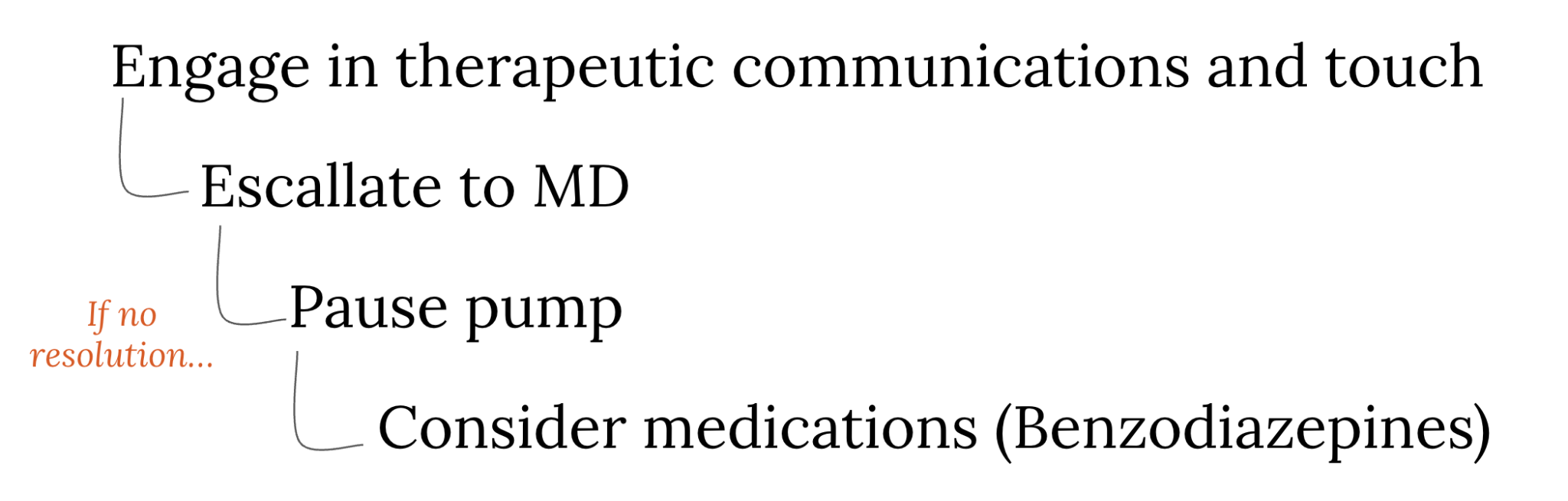
When reassurance and deescalation alone are insufficient, clinicians may temporarily pause the infusion, allowing the ketamine effects to diminish before deciding whether treatment can safely continue. If symptoms continue escalating despite these measures, the physician may evaluate whether the administration of calming medications (such as benzodiazepines) is appropriate. Because these types of medications may reduce ketamine's antidepressant effects, they are reserved only for situations in which other supportive interventions have proven insufficient.
Chart Review: Patient Demographics
The patient population included in this analysis reflects the complexity commonly seen in people dealing with clinical depression.
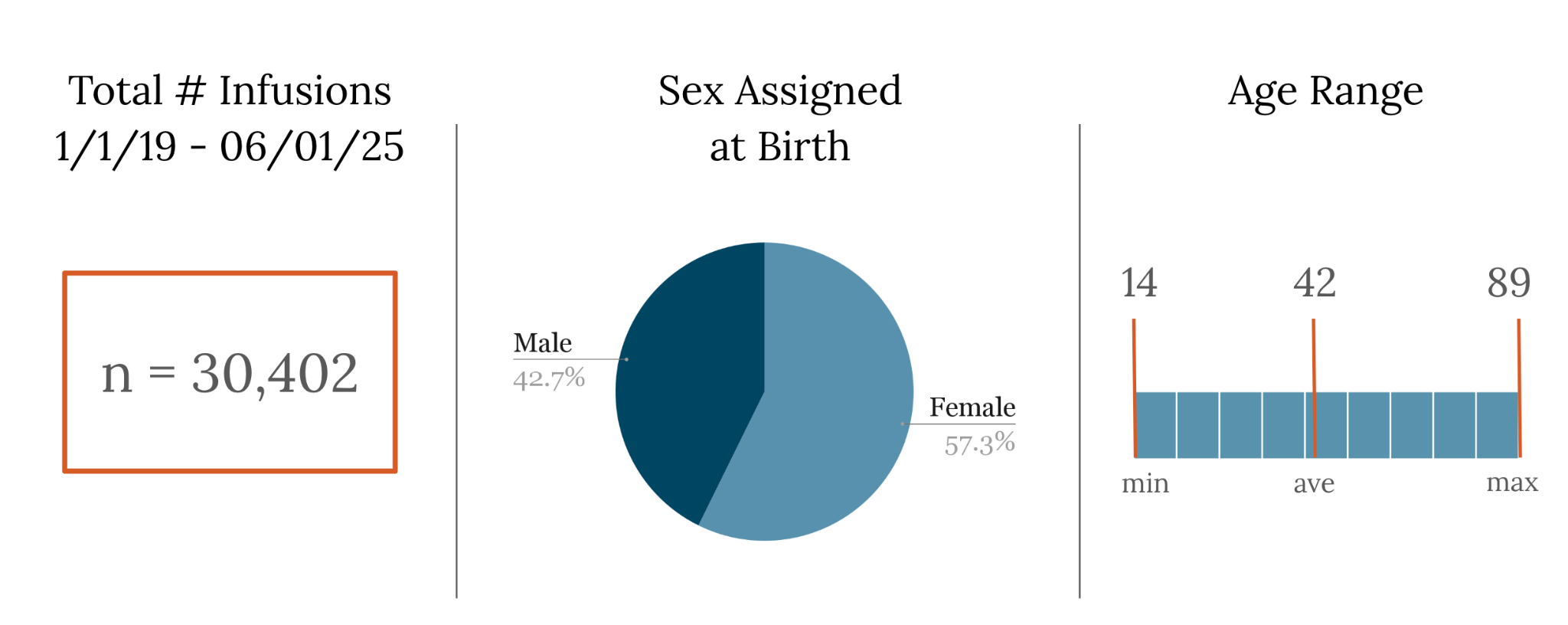
Among the 2,114 patients included in our analysis, 57.3% were assigned female at birth and 42.7% assigned male at birth. The average age was 42 years, with patients ranging from 14 to 89 years old.
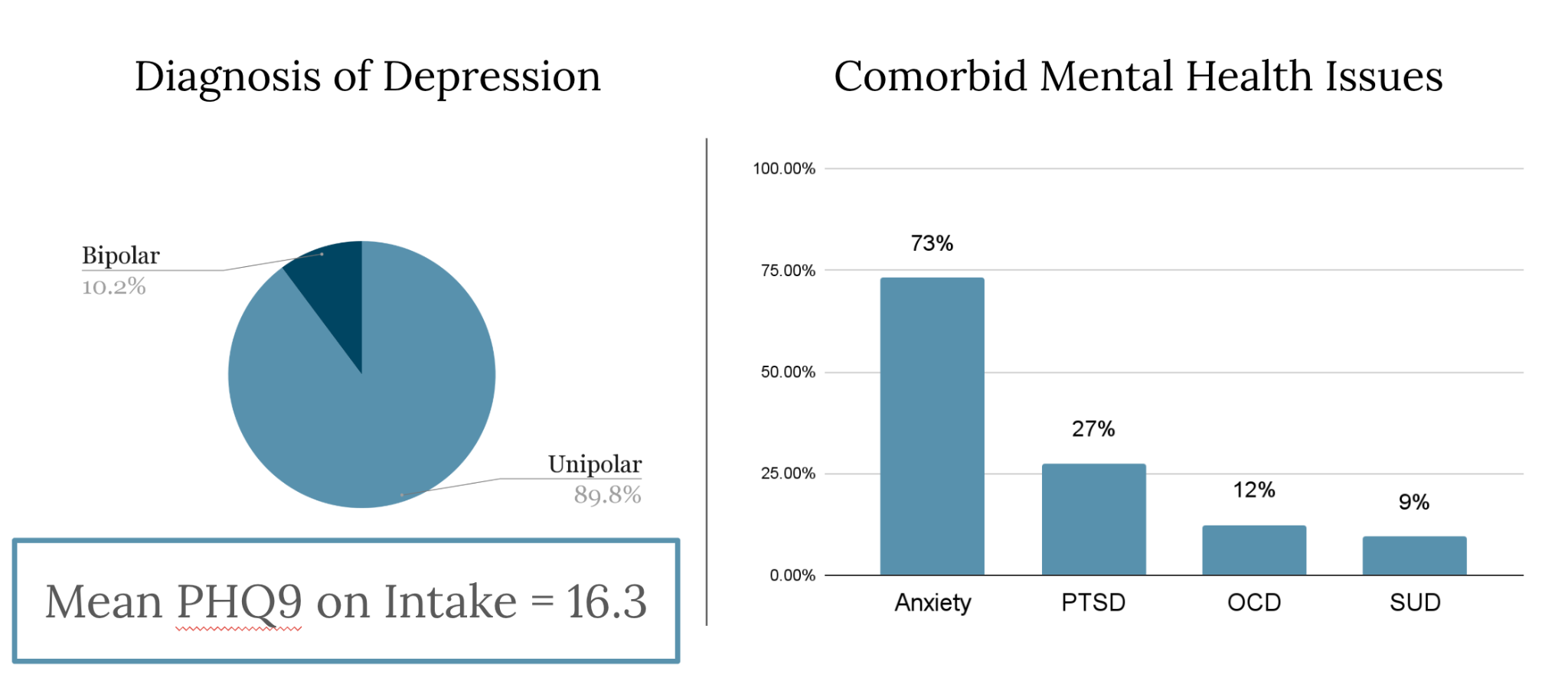
90% were being treated for unipolar depression, while 10% were receiving treatment during depressive episodes of bipolar disorder.
Perhaps most notable was the prevalence of anxiety. Nearly three-quarters of our patients (73%) shared that they have an anxiety disorder in addition to their depression. Other commonly reported co-occurring conditions included post-traumatic stress disorder (PTSD), obsessive-compulsive disorder (OCD), and substance use disorder.
These findings reinforce an important point: many individuals receiving ketamine treatment arrive with histories that make thoughtful preparation, environmental safety, and psychological support especially important.
Chart Review: Instances of Psychological Challenge
Review of data from the 30,000 infusions in this chart review demonstrated that psychologically challenging experiences are not uncommon, but serious psychological crises are.
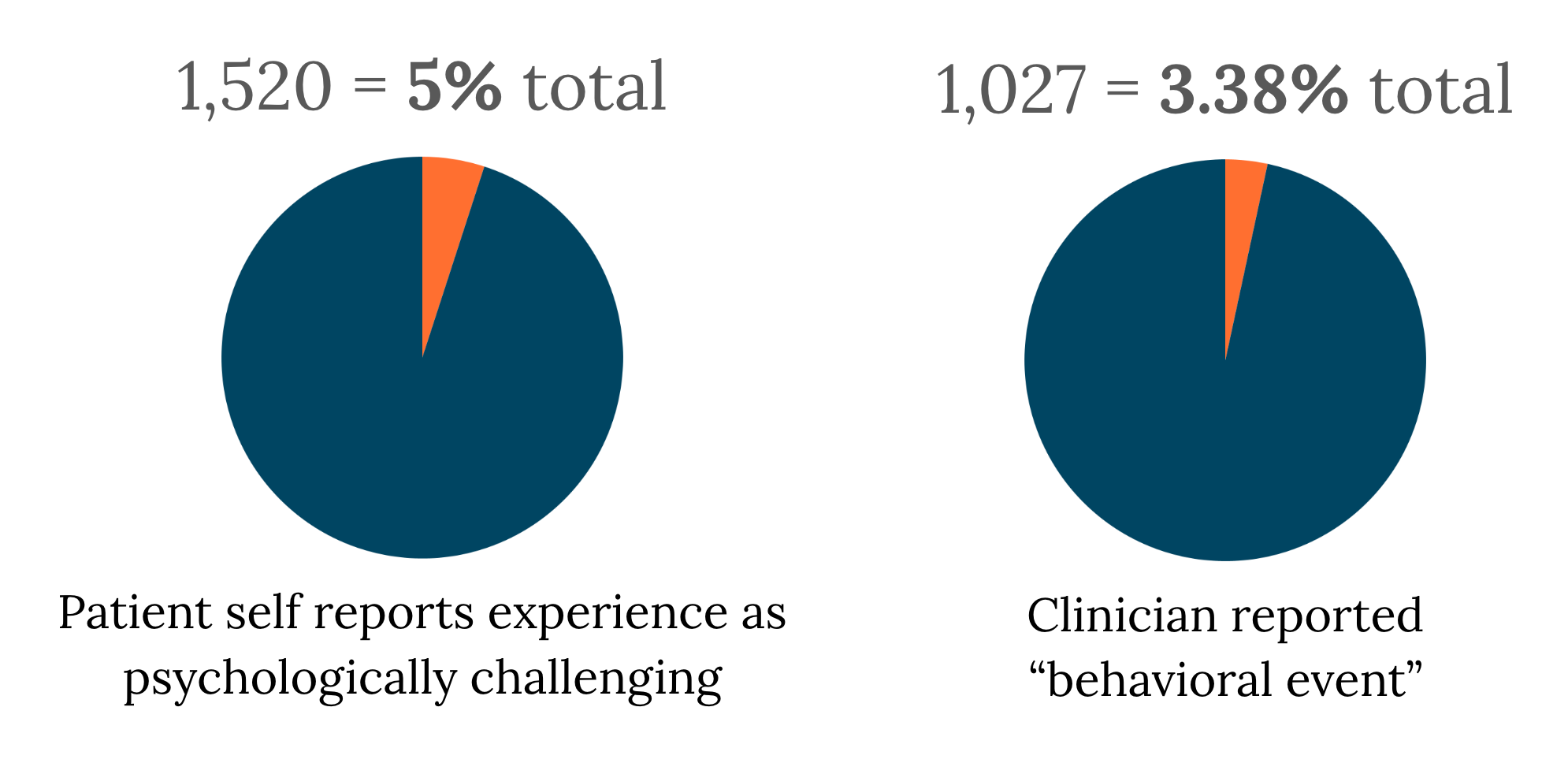
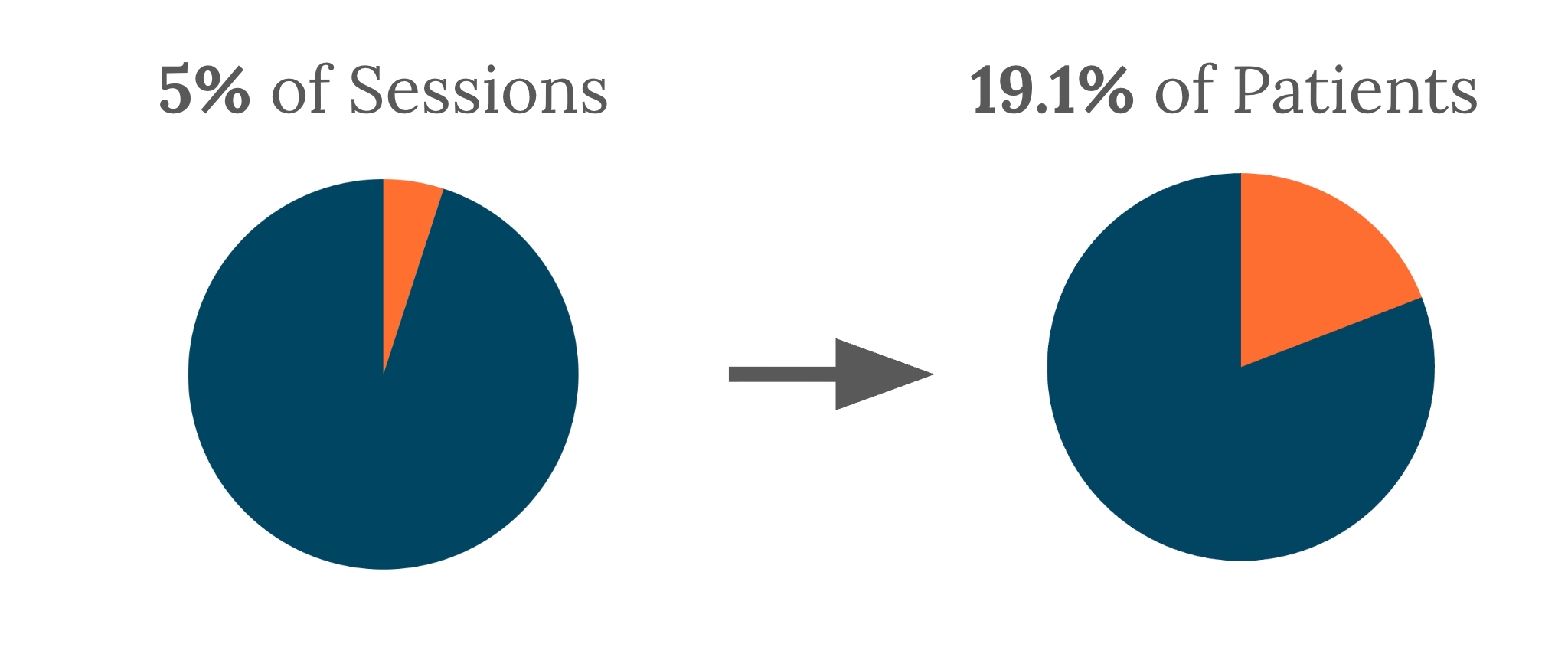
5% of all infusions were described by patients as difficult or challenging, translating into roughly 1 out of every 20 treatment sessions. However, this does not necessarily indicate that clinical intervention was required. Many patients experienced emotionally difficult moments internally while navigating them successfully on their own, and it wasn’t until after the session that they disclosed the difficult emotions during the session.
Clinicians documented observable behavioral events during 3.38% of infusions (approximately 1 out of every 30 treatments), reflecting situations in which patients outwardly demonstrated distress or sought assistance.
Across repeated treatments, approximately 1 in 5 (20%) patients experienced at least one psychologically challenging session during the course of their care at Ember Health.
Serious psychological events were considerably less likely.
Among 30,402 infusions, only 163 total infusions met criteria for a serious psychological event—an incidence of just 0.54% (1 in every 200 sessions)
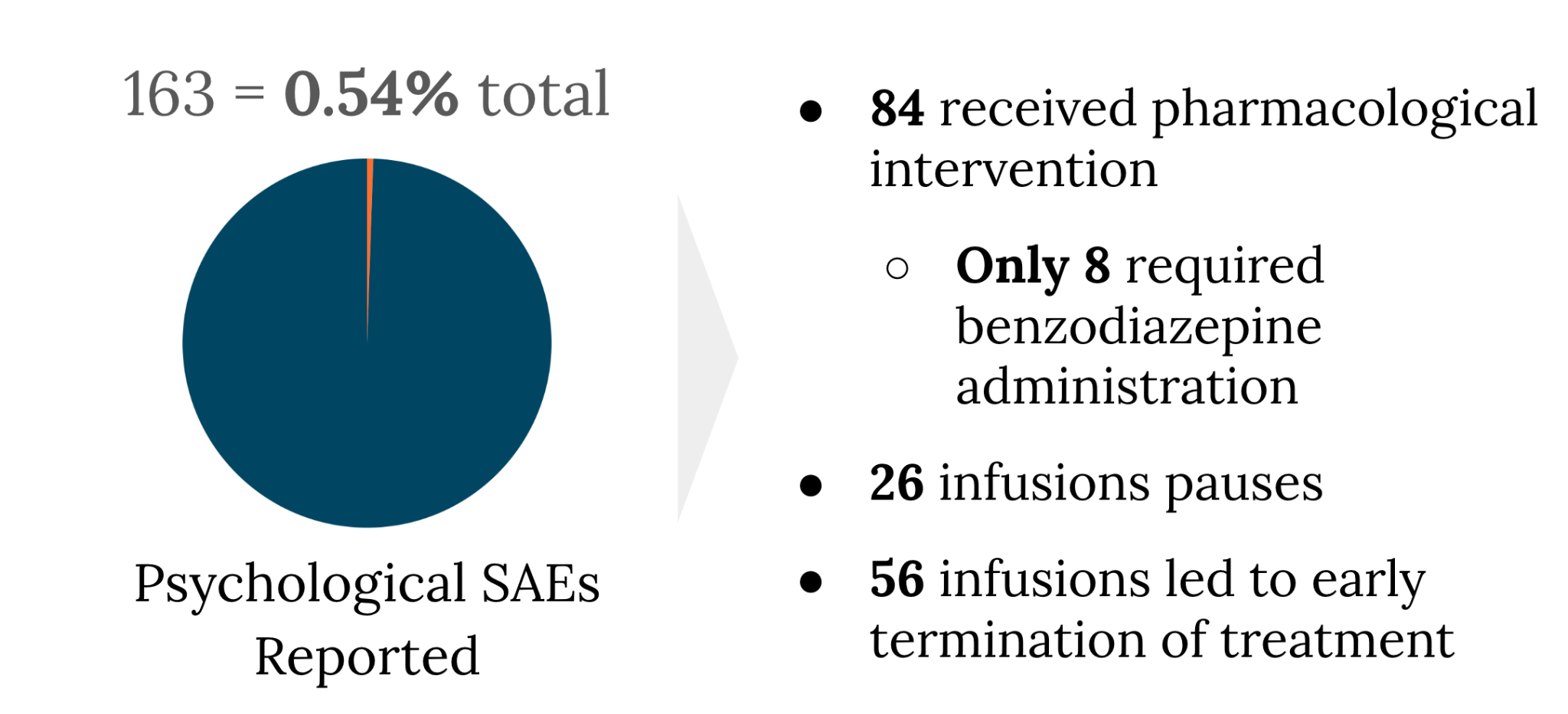
Among these cases, most were managed conservatively. Medication was administered only 84 times, most commonly to address concurrent medical symptoms such as nausea (Zofran) or tachycardia (propranolol). Only eight infusions required a sedating benzodiazepine due to psychological distress that continued despite supportive interventions.
Clinicians temporarily paused the infusion 26 times, often allowing patients to recover sufficiently to complete treatment. Across the entire dataset, fewer than 1% of all infusions required escalation beyond supportive psychological care.
This data reinforced that 90% of the sessions that patients described as psychologically difficult (representing only 5% of total infusions) were successfully supported through verbal reassurance and therapeutic interventions, without the need to stop the medication or administer benzodiazepines medication.
Although these events are uncommon, they deserve careful attention and require clinicians who are trained to respond with skill, confidence, and compassion.
Looking Forward
As IV ketamine becomes increasingly available, conversations about safety must extend beyond pharmacology alone.
The medication may be the primary component of treatment, but the clinical environment in which it is delivered, the preparation patients receive beforehand, and the support available when psychologically difficult moments arise also influence outcomes and safety.
It’s also important for patients and their provider team to understand that while 1 in 5 patients who go through IV ketamine care in Ember’s care context report at least one psychologically difficult session, these events can be managed safely, they do not cause lasting psychological harm, and patients often report how helpful and therapeutic such sessions can be in their long term healing processes.
There remains substantial opportunity for future research examining how elements such as 1:1 care, intention setting, therapeutic touch, music, environmental design, and other psychological interventions influence patient experiences and clinical outcomes. Understanding which components of care meaningfully reduce distress could help establish increasingly rigorous standards for ketamine treatment.
Until that evidence emerges, one principle is already clear: IV ketamine is safest and patients are best supported when treatment occurs within a carefully designed clinical setting, under the continuous care of a trained clinician who is prepared to provide both medical expertise and compassionate psychological support throughout the experience.
We provide evidence-based IV ketamine treatment for depression, anxiety, and other mental health conditions. Schedule a free consultation call to learn more.
- Brooklyn Heights
- Chelsea
- Tribeca
- Upper East Side
- Williamsburg