Advancing Bipolar Disorder Care


Schedule Your Ketamine Therapy Consultation Today
On October 14, 2026, Ember Health hosted A Conversation on Bipolar Disorder Care, a panel bringing clinical perspectives and lived experience together to examine gaps in care, and the promising option of IV ketamine care for people living with bipolar disorder.
Joining us for an insightful discussion were Dr. Stephanie Freitag, a clinical psychologist, bipolar specialist, and International Bipolar Foundation board member; Dr. Silvia Bernardi, Assistant Professor of Psychiatry at Columbia University, and psychiatrist and neuroscientist specializing in bipolar disorder and borderline personality disorder; and Lulu Essey, an award-winning Executive Creative Director, podcast host, speaker, patient advocate, and Ember patient. Our Co-Founder and Medical Director, Dr. Nico Grundmann, guided the conversation and contributed clinical perspective.
Amidst the conversation, a common theme surfaced: the complexity that makes someone with bipolar disorder need care can also make that care harder to come by. Progress requires clinicians who can work thoughtfully with that complexity and remain engaged with the person experiencing it.

The Scope of the Problem
Bipolar disorder can look different from one person to another, and changes over time, leaving many people undiagnosed and untreated for years.
Bipolar I involves manic episodes, often alongside depression. Bipolar II involves depressive and hypomanic episodes, where hypomania is less heightened than mania. Depression can occupy a substantial part of either condition. In two long-term studies, participants with bipolar I experienced depressive symptoms during approximately one third of the time they were being tracked. Patients with bipolar II reported depressive symptoms for half the time (bipolar I study, bipolar II study).
Recognizing bipolar disorder requires paying attention to how symptoms unfold over time. Symptoms commonly begin in late adolescence or early adulthood, but Dr. Freitag noted that her work includes people whose symptoms emerged later in life. Someone seeking help for depression may also overlook past periods of elevated mood, making a careful review of a patient’s history an important part of assessment (National Institute of Mental Health).
For the person seeking help, uncertainty has consequences. Lulu recalled being severely ill for months before clinicians settled on a diagnosis. A clear label eventually gave that experience a name, but didn’t resolve the difficulty in finding care. Her experience points to a broader gap: a 2025 review found an average of 9.1 years of undiagnosed or untreated bipolar disorder, although estimates varied substantially across studies (source).
These delays reinforce the need for continual assessment as clinicians learn more about a person’s history and patterns of mood changes. Dr. Bernardi described approaching that uncertainty with an open mind, and remaining willing to revise her understanding as she gets to know a patient. A conversation focused only on how someone feels today can leave important parts of their history unexplored.
The importance of sustained provider relationships

Treating bipolar depression brings legitimate clinical concerns. Dr. Bernardi spoke candidly about clinicians’ apprehension, particularly around the possibility of a patient switching into mania and how that concern can influence treatment decisions. Her comments acknowledged a difficult tension: clinicians have a responsibility to assess risk alongside the responsibility to respond to severe depression.
For patients, that tension can become another barrier to care. Lulu recalled years when she felt clinicians’ apprehension of an episode flaring contributed to treatment that left her feeling overmedicated. Her account of how she received care underscores the importance of discussing the reasoning behind treatment decisions with patients as partners. Knowing this information gives patients agency and helps them understand how a treatment plan may affect their lives.
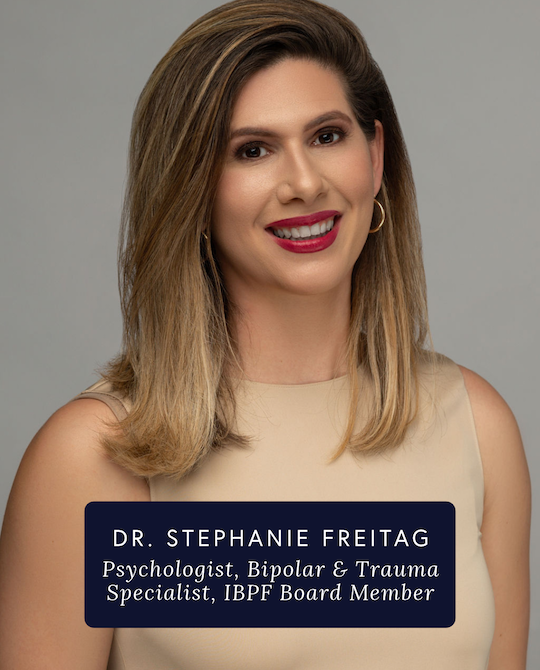
Lulu, Dr. Bernardi, and Dr. Freitag each emphasized the value of a sustained patient-provider relationship. Lulu noted that establishing preferences while well means a psychiatrist can keep them present during a relapse, even when a patient struggles to make decisions. Dr. Bernardi described the depth of understanding that collaboration requires: knowing a patient’s patterns of mood changes, possible triggers, and life circumstances. Dr. Freitag emphasized the knowledge each person brings to the relationship: she contributes expertise in psychology, while her patients contribute expertise in their own lives.
Together, these perspectives point toward the need for longitudinal, hands-on care providers who can notice changes, discuss options, and maintain communication with the patient and care team. This is the underpinning of our care model at Ember.
A personal account of system gaps and treatment success

Lulu Essey brought these themes into focus through her experience living with bipolar disorder for more than three decades. Diagnosed in her early twenties, she recalled being severely ill for months before clinicians settled on a diagnosis. Her treatment history has included hospitalizations, electroconvulsive therapy, and numerous psychiatric medications.
Finding ongoing care brought its own difficulties. Lulu described recounting a long and emotionally demanding treatment history to a prospective provider, only to learn that they would not take her on as a patient. While she respected clinicians’ honesty about the limits of their expertise, it was particularly difficult to be denied care without a referral or guidance about where to turn next.
During a depressive relapse, she found that her medications were no longer helping as they previously had. Lulu had already been researching IV ketamine for treatment-resistant depression, and so she pursued the evidence and outcomes extensively, ultimately raising the possibility of IV ketamine with her psychiatrist nearly a year after she began her research. His response was an enthusiastic “Yes,” with a referral to Ember.
His receptiveness mattered greatly to Lulu, yet her experience raises a broader concern: someone struggling to function may also be left to research and introduce the next treatment option on their own. Patients need clinicians who proactively explore options for them, even when those options may not be something they’re as familiar with – like IV ketamine.
The panel marked a milestone for Lulu: 18 infusions into her care with Ember, and working closely with her psychiatrist, she has successfully tapered off three medications she was taking for her depression. She shared she was feeling well, functioning better, and far more resilient. She clarified, this doesn’t mean she doesn't have bad days, and it doesn’t dismiss the possibility of another relapse in the future. But she has a tool to use when she needs it, and she views IV ketamine as a foundational element of her ongoing care, along with her psychiatrist, her daily practices and her support system.
You can also read more about Lulu’s personal experience with IV ketamine for depression at Ember in this blog post.
IV Ketamine as an emerging treatment for bipolar disorder
Ketamine has been the most extensively studied treatment for depression in the past 30 years. Research into its use specifically for bipolar depression continues to develop, and Ember has contributed to this research through ongoing work with Harvard and Mass General Brigham.
Despite its extensive research history, ketamine is still not viewed as a first line of defense for depressive symptoms. Dr. Bernardi challenges this notion. In her practice, she sometimes discusses ketamine earlier in care, particularly when patients are experiencing severe depression or when other medication approaches present clinical or practical challenges.
Dr. Grundmann and Dr. Bernardi spoke to the literature supporting this. Specifically, a randomized trial published in JAMA Psychiatry in 2026 enrolled 68 adults with treatment-resistant bipolar I or II depression. Participants received four infusions of either IV ketamine or midazolam over two weeks while continuing a stable mood stabilizer or antipsychotic. At the end of treatment, the ketamine group showed a significantly greater reduction in depressive symptoms. No mania, hypomania, or psychosis was observed in either group. The findings support further investigation, with larger studies and longer treatment periods needed to understand sustained benefits and risks (source).
A 2024 Yale study adds a longer-term clinical perspective. Researchers reviewed the records of 45 patients with bipolar depression who received IV ketamine or intranasal esketamine. Among the 38 patients with depression outcome data after the initial treatment series, 39% experienced at least a 50% reduction in depression scores, and 13.2% met remission criteria. No mania or hypomania occurred during that initial series. During subsequent maintenance treatment, however, 13 of the 45 patients experienced symptoms consistent with mania or hypomania. Because this was an observational study without a comparison group, it could not establish whether treatment caused those episodes (source).
These studies help explain the distinction Dr. Bernardi made between treating an acute depressive episode and providing longer-term maintenance care. Improvement during an initial treatment series leaves important questions about what follows. She also noted that much of the research involved patients receiving mood-stabilizing medications, an important part of interpreting the findings.
Dr. Grundmann spoke about how our ongoing research with Harvard Medical School and Mass General Brigham is contributing real-world observations about treatment response and how to maintain the improvements through individualized long term care planning. That work complements controlled trials by examining patients’ experiences over the course of care.
Together, the research and clinical discussion support thoughtful consideration of IV ketamine treatment within a broader care plan, with continued attention to mood changes, psychiatric oversight, and coordination with the patient’s other providers.

Ember Health’s Integrated Care Model
Contributions from panel members reinforced why at Ember, we believe that IV ketamine care should take place within the context of a patient's broader mental healthcare plan. We believe our role is to provide specialized IV ketamine treatment while collaborating with the clinicians who support patients over time.
That collaboration begins with assessing whether treatment is an appropriate next step. Patients may come through a referral or contact us directly. We consult with them and, when appropriate, their provider to understand treatment fit. This is especially important when working with people experiencing bipolar depression, where understanding the patient's history, current mood state, medications, and existing care relationships is essential.
Therapy remains part of the wider care relationship. Patients continue working with their own therapists outside their infusion appointments. Dr. Freitag described an individual patient whose reported improvement following IV ketamine treatment made more behavioral therapy possible. The account illustrated how these different parts of care support one another.
Advancing Bipolar Care with More Compassion
The conversation revealed several opportunities to strengthen care for people living with bipolar disorder:
- Investing in long term patient relationships and symptoms tracking: Clinicians need to recognize the full range of symptoms patients experience and remain open to revisiting their understanding as new information emerges. Patients need access to providers equipped to address the complexity of their condition, along with clear next steps when a particular clinician cannot offer appropriate care. Dr. Bernardi emphasized the importance of knowing patients deeply enough to make informed clinical decisions together.
- Staying abreast of literature in partnership with patients: Treatment decisions should reflect both clinical evidence and patients' experiences, preferences, and circumstances. As research into IV ketamine treatment and other approaches advances, clinicians need opportunities to evaluate emerging evidence and consider how it may expand the options available. And Lulu returned to the principle that guided her contributions throughout the evening: patients should have a meaningful role in shaping their care. She added that a seat on the care team comes with responsibility: what patients bring to their care every day matters as much as any appointment.
- Eliminating the stigma and reminding patients they are not their symptoms: Dr. Freitag closed with an important reminder about stigma. Many patients internalize negative assumptions about bipolar disorder and their own capabilities. She encouraged clinicians to recognize patients' strengths, creativity, and individuality alongside their symptoms.
We are grateful to Lulu Essey, Dr. Freitag, and Dr. Bernardi for sharing their perspectives and helping advance this conversation.
Their insights reinforce Ember Health's commitment to expanding access to thoughtful, evidence-informed IV ketamine care and working collaboratively with the broader mental health community.
Improving bipolar depression care requires us, as caregivers, to remain curious about each person's experience, willing to engage with difficult clinical questions, and attentive to the people whose lives are affected by the decisions we make.
We provide evidence-based IV ketamine treatment for depression, anxiety, and other mental health conditions. Schedule a free consultation call to learn more.
- Brooklyn Heights
- Chelsea
- Tribeca
- Upper East Side
- Williamsburg